Showing posts with label awards. Show all posts

Wednesday, November 30, 2011

Tax fallacy of the week: The Frozen CGT threshold

The media is reporting that the Chancellor's decision to freeze the annual CGT exemption at £10,600 is bad news for 'normal' people. What rot.

I read in The Telegraph today, for example,
“It looks like this freeze will pay for the SEIS,” [Seed Enterprise Investment Scheme]
and that:
“That will be very good for start-up businesses, but will have limited appeal for ordinary investors. This is robbing the ordinary people to pay for perks for the very rich.”
Come on. The annual exemption is intended as a convenience to avoid 'normal' people being in default for failing to disclose relatively small capital gains. I had been more concerned the exemption was going to be reduced to £1,000 (as was proposed in the Lib Dem manifesto).

As it stands the only people to benefit from the exemption on a regular basis need to be wealthy enough to realise capital gains of more than £10,000 each year. 'Gains' here means capital profits, which means disposing of capital assets (eg shares) worth many times that sum. They do it as an alternative to generating a further £10,000 of income which would be subject to 40% or 50% tax. Few 'normal' people can do that year after year.

So today I speak to all those commentators mourning the freezing of the CGT annual allowance at £10,600. For attempting to paint this as a problem for 'normal' people you get my Tax Fallacy of the week award.

Monday, November 28, 2011

Tax taunt of the week: “A quarter of drivers say cyclists should pay road tax”

The quote in my title refers to a survey attributed to Confused.com which led to this headline in the Metro: 'Irresponsible' cyclists should pay road tax, say quarter of drivers

Surprisingly though I could find no reference to the survey or, what I would describe as, the Tax Taunt, on the Confused.com website. Could this be because of the criticism and backlash the report produced?

Cycling website RoadCC, denounced Confused.com "as PR campaign goes spectacularly wrong". The site goes on to say:

"Insurance comparison firm Confused.com has provoked a storm of criticism from both cyclists and drivers alike with a ham-fisted and error-strewn press release aimed at promoting an equally confused road safety campaign and ostensibly highlighting the problem of road rage on Britain’s roads which has instead managed to alienate – not to mention confuse – almost everyone at whom it was aimed."

RoadCC then lists a number of alleged errors and further commentary in the same style and tone

Assuming the maths on RoadCC site are correct I think it's only fair to present Confused.com with my Tax Taunt of the week award.

Tuesday, November 22, 2011

Top ten tax understatements in GAAR Study report

Regular readers will know I have long awaited the outcome of Graham Aaronson's review. I have been referencing it on this blog since July 2010.

The Report has now been published and the media is awash with commentators rushing to offer their immediate conclusions. Suffice it to say that, as expected, the report offers an intelligent, practical and commercial way forwards. I look forward to hearing how the Government propose to move things on from here.

In the meantime I have identified my top ten tax understatements in the GAAR study report dated 11 November:
  1. [A GAAR] would deter (and, where deterrence fails, counteract) contrived and artificial schemes which are widely regarded as an intolerable attack on the integrity of the UK’s tax regime. Para 1.7(i)
  2. Judges inevitably are faced with the temptation to stretch the interpretation [of tax law], so far as possible, to achieve a sensible result; and this is widely regarded as producing considerable uncertainty in predicting the outcome of such disputes. Para 1.7(iii)
  3. The tax rules in many areas have become extremely complex and in practice can give rise to very anomalous results. Para 1.10
  4. In some cases the Courts, under the guise of purposive interpretation, have been prepared to stretch the interpretation of tax legislation in order to thwart tax avoidance schemes which they regard as abusive. Para 3.13
  5. It is still early days to determine the value of the DOTAS scheme as a whole. However, it is plainly a useful source of information for HMRC. Para 3.17
  6. It is clear that purposive interpretation, specific anti-avoidance rules and DOTAS are not capable of dealing with some of the most egregious tax avoidance schemes. Para 3.20
  7. [A GAAR] should target those highly abusive contrived and artificial schemes which are widely regarded as intolerable, but that it should not affect the large centre ground of responsible tax planning. Para 5.1
  8. The UK tax rules offer, and indeed in many instances positively encourage, the opportunity for taxpayers to reduce their tax liability. Taking advantage of this can be described as a form of tax avoidance, but clearly it is not something to be criticised and therefore it should not be counteracted by a GAAR. Para 5.14
And my two favourite tax understatements:
9. There are some areas of taxation, such as trusts, where the present statutory rules are extremely complex and can give rise to many anomalous consequences. Para 5.30
10. The UK’s tax legislation is notoriously long and complex. In many places it is virtually impenetrable. Para 1.7(iv)
Have you identified any other understatements in the report? Do add your observations as comments below.

Monday, November 21, 2011

Titillating tax story of the week - was stripper employed or self-employed?

This true story concerns a young lady (29) who originally trained for accountancy but then chose a more adventurous life. She worked as a stripper and lap dancer, allegedly earning upto £200k pa at Peter Stringfellow's London club.

Ms Quashie has been trying to prove that the self-employment contract that she signed when she began work was a sham. She is claiming that she was unfairly dismissed by the club even though she was ostensibly self-employed when she worked there. The corollary to this claim is that the 'employer' was avoiding employment taxes and payroll taxes on the sums paid to Ms Quashie.

Although Ms Quashie lost her original claim, an Employment Appeal Tribunal has awarded her the right to appeal that decision.

It seems that the nature of the relationship involved a number of factors suggesting that she was employed rather than self-employed. According to Ms Quashie, these included:
  • she was rostered to work for Stringfellows and there was an obligation on the club's part to allow her to work on set dates and pay her accordingly;

  • she was required to give free lap dances whenever a certain song was played;

  • the club did not allow her to work anywhere else;

  • the mutual obligations prove she was a Stringfellows employee.
This report provides further details and notes that, unsurprisingly, Stringfellows denies her claims , apparently stating that that Ms Quashie signed a contract saying she was self-employed, so cannot go to a tribunal for a job she never had.

As is well known however employers cannot evade their obligations simply by requiring employees to agree that they are self-employed. The dividing line, for tax purposes, between employed vs self-employed can be quite fine. Stringfellows is likely to win the case if they took top advice as to the wording of their contracts AND the facts support the terms thereof. In practice many 'employers' of self-employed workers fail on one or both of these tests. I would expect HMRC to take an interest in this case - for various reasons! ;-)

Anyway, given the nature of Ms Quashie's activities, this story has to receive my inaugural award for titillating tax story of the week.

Friday, November 18, 2011

Tax Trial of the week: Harry Redknapp

Although the trial does not take place until January, the announcement that the Tottenham Hotspur manager, Harry Redknapp, has been formally accused of cheating the public revenue, wins my Tax Trial of the week award.

Mr Redknapp's alleged offence relates to tax payments due while he was manager of Portsmouth football club. He has been indicted along with the then Chairman of the club, Milan Mandaric.

The allegations specify two sums of money, $145k and $150k (totalling about £180k) allegedly paid by Mr Mandaric between 2002 and 2007, in connection with Redknapp's employment, into a Monaco bank account allegedly opened by Mr Redknapp in order to conceal the monies from HMRC and to evade the payment of taxes thereon.

Both Mr Redknapp and Mr Mandaric deny any wrongdoing.

Tax survey of the week - The Office of Tax Simplification

The Office of Tax Simplification has launched a survey for accountants and tax advisers to complete. The survey builds on the latest research and reviews that the OTS has been doing in connection with small business taxation and disincorporation.

Having attended one of the OTS roadshows recently I can see that the survey reflects the feedback received. It is clearly intended to generate evdience based research which the OTS can then use to support recommendations to Ministers.

The deadline for responses is Wednesday 30 November 2011. Responses will be treated in confidence as there is no facility to give your name when you complete the survey.

Thursday, November 17, 2011

HMRC tax awards of the week

Clearly this is THE week for tax awards - given my most recent blog posts.

HMRC have their own awards - now in the their second year, to recognise the contribution that business, professional and voluntary communities make in helping HMRC run the UK’s tax system.

This year's External Engagement Awards were presented last night at 11 Downing Street to:

* Sarah Gillett – UK Ambassador to Switzerland and Liechtenstein – for her pivotal role as part of the UK team negotiating with the Swiss Government to seek ways to increase tax transparency for UK taxpayers, including the recent tax agreement.

* Paddy Millard – retired Chief Executive Officer of Tax Help for Older People (TOP) – for supporting HMRC with specialist advice about customers on low incomes, in particular his work on security and disclosure constraints.

* Rebecca Benneyworth – a fellow contributing editor of mine at Accounting Web – for her work in supporting HMRC’s consultation exercise on the future relationship with the tax agent community.

* Mike Sufrin – recently retired Head of Tax at Rolls Royce – for his commitment in working with HMRC to improve clarity and customer focus in Large Business, in particular his significant contribution to the development and implementation of the Senior Accounting Officer and the Large Business Transformation programme.

I'm pleased for all of them, but especially for Rebecca and Mike who I have known for some time.

Sunday, November 13, 2011

Tax joker of the week: David Cameron

David Cameron finally snapped in the Commons last week. Evidently frustrated by the French support for proposals to put a tax on City of London trades, he quipped:
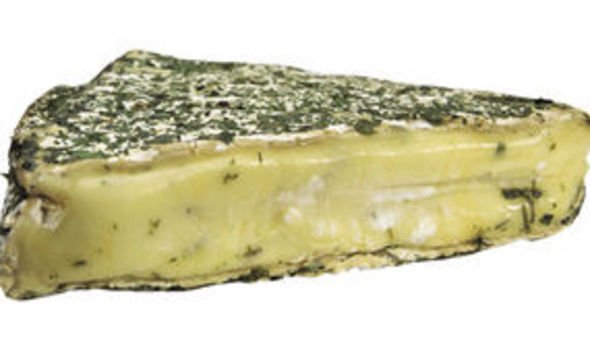
‘I’m sometimes tempted to ask the French if they would like a cheese tax,’
They certainly didn't respond well back in 2009 when the US announced plans to triple import duties on Roquefort cheese from 100 to 300 per cent. So I think we can confirm that the PM's instinct is right on this one.