Monday, January 24, 2011

Taxman teaser - Why Chief Exec of HMRC needs a personal aide

The FT reports that Dame Lesley Strathie, ultimate boss of HMRC, has appointed Carol Bristow – a director-level tax expert – as her personal aide.

The FT questions whether there is any justification for the Chief Exec of HMRC having such a high level personal aide "(Not even Sir Gus O’Donnell, the cabinet secretary, has such a senior personal assistant.)"

The answer I supect comes back to the governance structure of HMRC and the way some people expect the person at the top to be able to speak knowledgeably on any subject related to operational matters. In practice however, the role of Lesley Strathie, Chief Executive and Permanent Secretary does not require her to understand all aspects of our tax system. And few people are able to do this anyway.

I would have expected Dave Hartnett, "the senior tax professional in HMRC", to be the one called to appear before Select Committees, not the Chief Exec. I suspect that the mistake being made is that of the MPs. The appointment of Carol Bristow may simply reflect Dame Lesley's desire to ensure that she is best placed to provide MPs with informed answers to their enquiries.

It would of course be better if the MPs could be persuaded that they should be talking to Dave Hartnett rather than Dame Lesley. BUT for them it's easier to appear to be 'in charge' if they quiz and challenge someone who they know does not have a full command of key tax matters under discussion. I'd bet they don't want to call Dave Hartnett as he would expose the Select Committee's lack of understanding of the tax system.

What do you think?
Friday, January 21, 2011

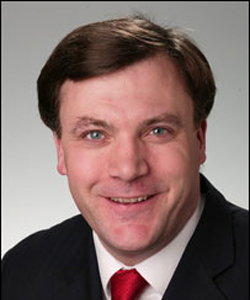
Tax tittle tattle: Ed Balls to be new Shadow Chancellor. So?

I was approached by one of the mainstream papers last night for my observations on the appointment of Ed Balls to replace Alan Johnson as Shadow Chancellor.

They needed 100-200 words which I duly supplied. Not sure if they will see the light of day in the press. Here they are for posterity:
Ed Balls will spar more effectively with George Osborne than Alan Johnson would have dared. At least Ed has some understanding of the tax system and of economic policy. We can expect him to pursue more realistic economic and tax policies than might otherwise have been the case. How many will be properly costed and realistic rather than simply populist remains to be seen.
It often seemed that some of the more effective tax policies pursued by Gordon Brown when he was Chancellor could be traced back to Ed Balls. Rightly or wrongly I assumed that the worst tax changes introduced by Brown were entirely his own idea. I trust therefore that Ed Balls had no hand in the IR35 fiasco or the short-lived introduction of a 0% starter rate of corporation tax. What we do know is that he has long claimed he would not have made the mistake of abolishing the 10p starter rate of income tax.
Will Ed’s, no doubt, continued connections with civil servants from his days at the Treasury come in useful? For example, will he be able to engineer ‘leaks’ that damage the Government?
I suspect there will continue to be a need to debunk tax stories whether they emanate from the Government or from the opposition. Tim Harford does this on his Radio 4 programme, ‘More or Less’ and I have a go too on the TaxBuzz blog.
Mark Lee, Chairman of the Tax Advice Network

Thursday, January 20, 2011

Tax twist: BBC compares job losses re VAT vs National Insurance

I'm never sure whether politicians deliberately misquote figures or do so naively. Here's a good recent example related to the question of which was worse, an increase in the so-called 'jobs tax' (Employers' NICs) or the rise in VAT?

The Shadow Chancellor, Alan Johnson, has been saying:
“At the time the Conservatives called the National Insurance increase a tax on jobs. The Chartered Institute of Personnel and Development [CIPD] say that that would have taken 75,000 jobs, VAT would cost 250,000 jobs.”
An editorial in the Times on 5 January was dismissive of the CIPD figures suggesting that:
“[Alan Johnson's] claim that the VAT rise would cost 250,000 jobs appears to be a figure plucked from the ether without supporting evidence.”
This was harsh as shown on the fullfact.org website.

However, the full picture was revealed on 7 January by the BBC's More or Less programme, presented by Tim Harford. A good summary of the key points appears on the XpertHR blog. At the time of writing, the recording is available on BBC iplayer. Personally I enjoy listening to the weekly podcast as it complements the debunking nature of this TaxBuzz blog.

Bottom line
You cannot legitimately compare the forecast impact of job losses that might be caused by the two different tax rises. At least not without also comparing the quantum of tax being raised.

Labour's 'jobs tax' was forecast to start in April 2011 and expected to raise just over £3billion a year. The CIPD estimated this would cause 75,000 job losses by 2015/16.

The VAT rise to 20% started on 4 January and is expected to raise just over £12billion a year. That's 4 times as much as the 'jobs tax'. The CIPD has estimated the VAT rise: "will reduce UK employment by 250,000 over a five year period relative to the level of employment that would otherwise be achieved."

So, even if the CIPD predictions are correct, the impact on jobs will be significantly less than 4 times the impact of a rise in employers' national insurance contributions.

Was Alan Johnson naive or deliberately comparing apples and pears?

Tuesday, January 18, 2011

Tax twang: Tax avoiders and evaders to be exposed on Wikileaks

The papers are reporting that Rudolf Elmer, a former executive at Bank Julius Baer, yesterday handed over a CD listing the details of 2,000 allegedly tax dodging individuals and firms to Wikileaks founder Julian Assange. Assange said he could publish the data within two weeks.

According to media reports Elmer was, until 2002, chief operating officer of the bank in the Cayman Islands. Bank Julius Baer is one of Switzerland’s top private banks and accuses Elmer of stealing the information he has now passed to Wikileaks.

As the Telegraph reports: Celebrities using tax avoidance schemes could be in the spotlight
Taking advantage of complex tax laws in order to reduce the individual burden is perfectly legal and has been standard practice among the super-rich for years.
Whilst that is true, I have mentioned on this TaxBuzz blog many times, that the dividing line between legal tax avoidance and illegal tax evasion is more blurred than some would have us believe.

Fancy tax avoidance schemes will often be determined as legal by top tax barristers. Such opinions will often be hedged with caveats but as long as all the related advice is followed to the letter, all should be well. By which I mean the rich taxpayer will have a strong defence and can claim to have stayed on the right side of the letter of the law. On the other side of the line we have blatant tax evaders. Contrary to the press stories implying that they are always rich, they operate at all levels of society. Tax evaders are those who fail to disclose all sources of taxable income, inflate their business expenses or otherwise pay less tax than is strictly due.

Rudolf Elmer's list apparently includes the names of celebrities and politicians from around the world. Many will be household names and, I've no doubt, many will be British. I suspect they will all be tarred with the same brush. Only they, their closest advisers and HMRC (the taxman) will know whether their deposits were the result of fancy tax schemes or the proceeds of blatant tax evasion.

Or does the list contain more extensive details of the "tax dodging individuals and firms"? Time will tell.

Sunday, January 16, 2011

Tax tease: Inaccurate Footie Tax story resurrected as 'news'

The headline in today's Sunday Times is "Top footballers dodge millions in income tax". And that "Rooney pays 2% on some earnings." Other footballers are then mentioned too.

The report seems to simply confirm the predictions of a very similar story the Times published in May 2009.
Football stars plan to dodge 50p tax rate
Scheme being considered by Manchester United, Arsenal and Liverpool means players can get salaries as interest-free loans
The Press Association are reporting the 'new' story as leading to a "Crackdown on top rate tax loophole". As the Sunday Times report though HMRC have been trying to do this for years.

The footballers are using two tax avoidance schemes. One involves their clubs paying large chunks of their earnings as 'image rights' rather than as employment income. The other scheme involves the footballers taking loans rather than salaries or dividends from companies they own. I need to debunk a key element of this part of the story to make clear that it's not as effective as the press reports suggest.

For the avoidance of doubt I'm no fan of this tax avoidance. Regular readers of the TaxBuzz blog may recall I mentioned this in the context of the 7th of my '8 fallacies that undermine the UKuncut tax protests' last month.

Debunking
When someone, a footballer or otherwise, takes a loan from their company they initially pay very little income tax. Instead of being taxed on the full amount they only pay tax on the interest they should have been charged.

In 2009 the Times suggested the tax would be as little as 2.5%. It now seems to be just 2%. The reports miss the key point though that this tax is paid every year for as long as the loan lasts. So the longer the loan lasts the more tax is paid. If the loan lasts for ten years and interest rates rise the total tax paid could end up being more than the tax they hoped to avoid.

Eventually the company will at some stage have to pay salaries or dividends to the footballer to clear the loans. This income will be taxed at the top rate - in addition to the tax already paid on the 'beneficial loans'.

I mention all this to help discourage anyone from thinking that it's always tax effective to take loans rather than salaries or dividends from their company. It seems to be attractive for footballers as long as they do NOT own the company and as long as they will leave the UK permanently before the loans need to be repaid.

When your own company lends you money the company is required to (effectively) also lend money to HMRC. This reduces the cash available in the company. And this loan to the taxman is only repaid when the loan to which it relates is repaid.

Most people trying to copy the footie players' tax avoidance scheme will also have to pay a fortune to close down their companies using complex (and expensive) schemes without paying back the loans. When that happens they will still face years of sustained challenges from HMRC who will argue that the loans were a sham and subject to tax as earnings.

Can't say I have any sympathy for the footballers though.