Well, it's now over 4 months since I last posted on this Tax-Buzz blog. And not one person has asked me why or seems to have missed it. After over 400 posts over the previous 4 years. I think this evidences that much of what is said about blogging is bogus. I first shared my concerns on this topic back in 2008.
Don't get me wrong. I'm still an active blogger - especially for Ambitious Accountants where I share tips, insights and advice for a key target audience. I have posted almost 500 items there over the last few years and routinely adapt blog posts for inclusion in talks and longer articles.
But returning to this Tax-Buzz blog, the main purpose was to attract traffic and interest for the Tax Advice Network. Initially the blog was embedded in the site and then at the end of 2007 we moved to this blogspot platform as it is more Google friendly.
I also had an idea at the outset that the blog would evidence my stance as an independent tax commentator and explainer of complex tax issues. But for each year of blogging here I reckon I have had no more than two approaches by the media for interviews or comment. Not really worth the effort I think it's fair to say.
And my life has moved on. I remain Chairman of the Tax Advice Network and we publish a weekly practical tax tips newsletter written especially for accountants in general practice. Beyond this though my income generative writing, mentoring, facilitating and speaking gigs have no direct connection with tax commentary issues. When I reviewed how I was spending my time I realised that blogging here was taking too much time for no perceived benefit. So I stopped.
The writing was on the wall when I posted this piece last November: After 400 Tax-Buzz blog posts - what now?
I was recently advised to make it clear that the absence of any Tax-Buzz blog posts in 2012 was a conscious decision. Maybe I'll find an new angle that better resonates with my other activities. There's certainly no absence of tax stories these days to highlight, flag, explain or clarify. But for now I'll leave it to others.
Tuesday, May 15, 2012
Friday, December 30, 2011
Top 5 TaxBuzz posts of 2011
Which TaxBuzz posts grabbed your attention this year?
Tax tease: Late filing penalty stays at £100
During 2011 I added almost 90 new posts to this blog taking the total over the last 4 years to well over 400. At different times I got bored, distracted and overly enthusiastic. This is apparent from the wildly different number of monthly posts across the year.
Here is a reminder of the Top 5 most-visited TaxBuzz blog posts of 2011. Click on the titles if you want to read them again. Your comments are also still welcome too.
This post was inspired by a intriguing article in the Sunday Times and a conversation I had with a top Stamp Duty tax lawyer.
The programme included an interview with Graham Aaronson prior to the publication of his GAAR report
31 March 2011
A classic case of debunking misleading media stories about a theoretically possible rise to£1,300
HMRC turn the Spotlight on the newest EBT related tax avoidance schemes
HMRC turn the Spotlight on the newest EBT related tax avoidance schemes
10 Mar 2011
Fair warning to anyone tempted to pay good money for putting funds into such schemes
The best tax advice you will ever hear
9 Aug 2011
All too often the tax advice shared by amateurs proves the truth of that old adage that 'a little knowledge is a dangerous thing'.The best tax advice you will ever hear
9 Aug 2011
Wednesday, November 30, 2011
Tax fallacy of the week: The Frozen CGT threshold
The media is reporting that the Chancellor's decision to freeze the annual CGT exemption at £10,600 is bad news for 'normal' people. What rot.
I read in The Telegraph today, for example,
As it stands the only people to benefit from the exemption on a regular basis need to be wealthy enough to realise capital gains of more than £10,000 each year. 'Gains' here means capital profits, which means disposing of capital assets (eg shares) worth many times that sum. They do it as an alternative to generating a further £10,000 of income which would be subject to 40% or 50% tax. Few 'normal' people can do that year after year.
So today I speak to all those commentators mourning the freezing of the CGT annual allowance at £10,600. For attempting to paint this as a problem for 'normal' people you get my Tax Fallacy of the week award.
I read in The Telegraph today, for example,
“It looks like this freeze will pay for the SEIS,” [Seed Enterprise Investment Scheme]and that:
“That will be very good for start-up businesses, but will have limited appeal for ordinary investors. This is robbing the ordinary people to pay for perks for the very rich.”Come on. The annual exemption is intended as a convenience to avoid 'normal' people being in default for failing to disclose relatively small capital gains. I had been more concerned the exemption was going to be reduced to £1,000 (as was proposed in the Lib Dem manifesto).
As it stands the only people to benefit from the exemption on a regular basis need to be wealthy enough to realise capital gains of more than £10,000 each year. 'Gains' here means capital profits, which means disposing of capital assets (eg shares) worth many times that sum. They do it as an alternative to generating a further £10,000 of income which would be subject to 40% or 50% tax. Few 'normal' people can do that year after year.
So today I speak to all those commentators mourning the freezing of the CGT annual allowance at £10,600. For attempting to paint this as a problem for 'normal' people you get my Tax Fallacy of the week award.
Monday, November 28, 2011
Tax temptation of the week: Stamp Duty Land Tax avoidance
The Saturday Times* was headlined with reference to a story about how the 'super-rich' avoid paying Stamp Duty Land Tax (SDLT) when they buy their mansions.
And I note that Solicitors have been advised by the Law Society not to get involved in SDLT schemes. That, I think, says it all.
Simply stated the property doesn't change hands. The purchaser buys the shares in a limited company that owns the property. As long as the company itself doesn't sell the property there is no SDLT to pay.
Easy? Not at all. How to do you get the property into a limited company in the first place without paying SDLT? There are many complex tax related minefields to negotiate to make such a plan work. And it costs thousands of pounds to find out if it would be possible and to navigate the minefields.
Please do not be fooled into thinking that any of this is something to consider doing for the sort of properties that we normal mortals can afford. And there are no other simple ways to avoid SDLT any more, as I explained in May when answering the question: Are stamp duty avoidance schemes worth the money?
A similar view to mine was shared on CityWire in March. They explained: The chancellor has finally clamped down on stamp duty avoidance schemes widely used by rich individuals buying high value residential properties as well as buyers of commercial properties.
The real issue here is the jealousy that the Times story generates. We don't like paying SDLT. The media are highlighting the facility available to the super-rich and we are in uproar that they can avoid this tax. But how many readers would choose to pay hundreds of thousands or millions of pounds in tax on a new property if there was a reliable legal way to avoid doing so?
So we agree that the 'loophole' should be plugged. Will it be? Don't hold your breath.
*As The Times story is behind their paywall I have linked to a rehash of the same story on the 'This Is Money' website.
Tax taunt of the week: “A quarter of drivers say cyclists should pay road tax”
 The quote in my title refers to a survey attributed to Confused.com which led to this headline in the Metro: 'Irresponsible' cyclists should pay road tax, say quarter of drivers
Surprisingly though I could find no reference to the survey or, what I would describe as, the Tax Taunt, on the Confused.com website. Could this be because of the criticism and backlash the report produced?
Cycling website RoadCC, denounced Confused.com "as PR campaign goes spectacularly wrong". The site goes on to say:
"Insurance comparison firm Confused.com has provoked a storm of criticism from both cyclists and drivers alike with a ham-fisted and error-strewn press release aimed at promoting an equally confused road safety campaign and ostensibly highlighting the problem of road rage on Britain’s roads which has instead managed to alienate – not to mention confuse – almost everyone at whom it was aimed."
RoadCC then lists a number of alleged errors and further commentary in the same style and tone
Assuming the maths on RoadCC site are correct I think it's only fair to present Confused.com with my Tax Taunt of the week award.
Thursday, November 24, 2011
Tax tosh of the week: 50p tax rate to STAY
Another day, another report about how the 50% top rate of income tax is BAD for the British Economy. This week it is the respected UK Centre for Economics and Business Research (CEBR). In September it was a group of 20 high profile economists.
Let me be clear I don't WANT to pay over half my income away in taxes - who would. (It's over half, by the way, as most high earners also pay an extra 2% NICs). I don't think the 50% rate is a good thing. BUT equally I cannot, for one moment, imagine that the Coalition Government are going to abolish the 50% rate any time soon. The CEBR report is balanced and fair but it's clearly intended to influence the Chancellor and the Coalition Government. In this it won't succeed.
Now, if someone were to be rather more imaginative, a different campaign might have more chance of success. How about showing what the impact would be of raising the income level at which the 50p rate starts from £150k to say, £250k? Clearly this would reduce the tax take but not by benefiting the 'super-rich' - by definition. It would however reduce the concerns of the vast majority of 'ORDINARY' business owners who MIGHT otherwise feel demotivated by the prospect of paying 50% tax. Remember that the rate is actually higher than this for many people earning between £100k and £150k.
As I've said before though at this stage NO-ONE yet knows how much tax the 50% rate is generating. All the reports, letters in the press and campaigns are based on speculation. The CEBR report admits as much.
I have explained the rationale for my observations and predictions before (see below). So today I will simply present the CEBR with my Tax Tosh of the week award.
Related posts
5/4/11 - 50% tax rate announced in Budget 2009 but 2 years on and the self employed haven't paid it yet
Tuesday, November 22, 2011
After 400 TaxBuzz blog posts - what now?
That last blog post was the 400th I've posted here. I thought I should recognise the fact as no one else will do so.
I started this blog around 4 years ago by offering comment, explanation and analysis of key UK tax developments. I made a classic mistake in that I was inconsistent. Sometimes I wrote for the general public. Sometimes I wrote for accountants. (Both can use the Tax Advice Network to source specialist tax advice). The blog was intended to help optimise the Search Engine attractiveness of the Tax Advice Network website.
Two years ago I wrote a Review of TaxBuzz blog 2009 in which I explained my thinking and explored the types of issues that had featured on the blog.
I have long enjoyed writing and sharing ideas and tips. Years ago I was complimented on my ability to explain complicated issues in an understandable way. I will let my readers be the judge of whether I have continued to exhibit that skill.
Two of the most common topics for my blog posts have been tax quirks benefiting MPs and explanations about the complexity of tax avoidance and tax evasion. I like to think I have adopted an even hand as regards the latter issue although I have not hidden my dislike of artificial and abusive avoidance schemes.
Sometime during 2009 I decided to focus the blog on debunking tax stories in the media. I felt this was a worthy service but I have received limited feedback and started to question who was I doing this for? In September 2011 I got bored and went for almost 2 months without posting any new items to this blog. I realised that much as I had enjoyed the blogging it was taking too much time and for no discernable benefit.
The nonsense written in the media about Vince Cable's VAT situation brought me back at the end of October. having written two posts on the topic I want to avoid slipping back into my old ways. Throughout the month of November I have been posting a new style of TaxBuzz in the form of, typically light-hearted, tax related awards. These rarely take much time to write. I have had little feedback to date ;-(
Whether I will continue posting an average of 2 items a week for the next 4 years I canot say. But 400 tax related posts is quite an achievement and I'm rather proud of myself.
Do let me know your thoughts.....
Tax scheme warning of the week - from the GAAR study report
I was especially taken by para 5.43 of the GAAR study report to which I referred in my last blog post:Is it just wishful thinking on my part? This strikes me as a warning to anyone who continues to promote 'abusive', 'artificial', 'egregious' or 'unacceptable' tax schemes (as referenced in the report).
I [Graham Aaronson QC, the author of the report] therefore see no unfairness in applying the GAAR to an arrangement which is not yet completed before the date when it comes into force; and it would in my view be appropriate to do so.
The General Anti-Abuse Rule (GAAR) has yet to be finalised or to enter the staute books. However the GAAR's guardian has set out a clear warning that it should be capable of operating retrospectively. You have been warned!
Do you agree?
Related posts
- Do you have to organise your affairs to pay the maximum tax?
- The beginning of the end for structured tax avoidance schemes?
- Naive promoters of tax avoidance schemes
- Five facts all accountants need to know about tax avoidance schemes
- Five more facts all accountants need to understand about tax avoidance schemes
Top ten tax understatements in GAAR Study report
Regular readers will know I have long awaited the outcome of Graham Aaronson's review. I have been referencing it on this blog since July 2010.
The Report has now been published and the media is awash with commentators rushing to offer their immediate conclusions. Suffice it to say that, as expected, the report offers an intelligent, practical and commercial way forwards. I look forward to hearing how the Government propose to move things on from here.
In the meantime I have identified my top ten tax understatements in the GAAR study report dated 11 November:
- [A GAAR] would deter (and, where deterrence fails, counteract) contrived and artificial schemes which are widely regarded as an intolerable attack on the integrity of the UK’s tax regime. Para 1.7(i)
- Judges inevitably are faced with the temptation to stretch the interpretation [of tax law], so far as possible, to achieve a sensible result; and this is widely regarded as producing considerable uncertainty in predicting the outcome of such disputes. Para 1.7(iii)
- The tax rules in many areas have become extremely complex and in practice can give rise to very anomalous results. Para 1.10
- In some cases the Courts, under the guise of purposive interpretation, have been prepared to stretch the interpretation of tax legislation in order to thwart tax avoidance schemes which they regard as abusive. Para 3.13
- It is still early days to determine the value of the DOTAS scheme as a whole. However, it is plainly a useful source of information for HMRC. Para 3.17
- It is clear that purposive interpretation, specific anti-avoidance rules and DOTAS are not capable of dealing with some of the most egregious tax avoidance schemes. Para 3.20
- [A GAAR] should target those highly abusive contrived and artificial schemes which are widely regarded as intolerable, but that it should not affect the large centre ground of responsible tax planning. Para 5.1
- The UK tax rules offer, and indeed in many instances positively encourage, the opportunity for taxpayers to reduce their tax liability. Taking advantage of this can be described as a form of tax avoidance, but clearly it is not something to be criticised and therefore it should not be counteracted by a GAAR. Para 5.14
9. There are some areas of taxation, such as trusts, where the present statutory rules are extremely complex and can give rise to many anomalous consequences. Para 5.30
10. The UK’s tax legislation is notoriously long and complex. In many places it is virtually impenetrable. Para 1.7(iv)
Have you identified any other understatements in the report? Do add your observations as comments below.
Monday, November 21, 2011
Titillating tax story of the week - was stripper employed or self-employed?
This true story concerns a young lady (29) who originally trained for accountancy but then chose a more adventurous life. She worked as a stripper and lap dancer, allegedly earning upto £200k pa at Peter Stringfellow's London club.
Ms Quashie has been trying to prove that the self-employment contract that she signed when she began work was a sham. She is claiming that she was unfairly dismissed by the club even though she was ostensibly self-employed when she worked there. The corollary to this claim is that the 'employer' was avoiding employment taxes and payroll taxes on the sums paid to Ms Quashie.
Although Ms Quashie lost her original claim, an Employment Appeal Tribunal has awarded her the right to appeal that decision.
It seems that the nature of the relationship involved a number of factors suggesting that she was employed rather than self-employed. According to Ms Quashie, these included:
As is well known however employers cannot evade their obligations simply by requiring employees to agree that they are self-employed. The dividing line, for tax purposes, between employed vs self-employed can be quite fine. Stringfellows is likely to win the case if they took top advice as to the wording of their contracts AND the facts support the terms thereof. In practice many 'employers' of self-employed workers fail on one or both of these tests. I would expect HMRC to take an interest in this case - for various reasons! ;-)
Anyway, given the nature of Ms Quashie's activities, this story has to receive my inaugural award for titillating tax story of the week.
Ms Quashie has been trying to prove that the self-employment contract that she signed when she began work was a sham. She is claiming that she was unfairly dismissed by the club even though she was ostensibly self-employed when she worked there. The corollary to this claim is that the 'employer' was avoiding employment taxes and payroll taxes on the sums paid to Ms Quashie.
Although Ms Quashie lost her original claim, an Employment Appeal Tribunal has awarded her the right to appeal that decision.
It seems that the nature of the relationship involved a number of factors suggesting that she was employed rather than self-employed. According to Ms Quashie, these included:
- she was rostered to work for Stringfellows and there was an obligation on the club's part to allow her to work on set dates and pay her accordingly;
- she was required to give free lap dances whenever a certain song was played;
- the club did not allow her to work anywhere else;
- the mutual obligations prove she was a Stringfellows employee.
As is well known however employers cannot evade their obligations simply by requiring employees to agree that they are self-employed. The dividing line, for tax purposes, between employed vs self-employed can be quite fine. Stringfellows is likely to win the case if they took top advice as to the wording of their contracts AND the facts support the terms thereof. In practice many 'employers' of self-employed workers fail on one or both of these tests. I would expect HMRC to take an interest in this case - for various reasons! ;-)
Anyway, given the nature of Ms Quashie's activities, this story has to receive my inaugural award for titillating tax story of the week.
Friday, November 18, 2011
Tax Trial of the week: Harry Redknapp
Although the trial does not take place until January, the announcement that the Tottenham Hotspur manager, Harry Redknapp, has been formally accused of cheating the public revenue, wins my Tax Trial of the week award.
Mr Redknapp's alleged offence relates to tax payments due while he was manager of Portsmouth football club. He has been indicted along with the then Chairman of the club, Milan Mandaric.
The allegations specify two sums of money, $145k and $150k (totalling about £180k) allegedly paid by Mr Mandaric between 2002 and 2007, in connection with Redknapp's employment, into a Monaco bank account allegedly opened by Mr Redknapp in order to conceal the monies from HMRC and to evade the payment of taxes thereon.
Both Mr Redknapp and Mr Mandaric deny any wrongdoing.
Mr Redknapp's alleged offence relates to tax payments due while he was manager of Portsmouth football club. He has been indicted along with the then Chairman of the club, Milan Mandaric.
The allegations specify two sums of money, $145k and $150k (totalling about £180k) allegedly paid by Mr Mandaric between 2002 and 2007, in connection with Redknapp's employment, into a Monaco bank account allegedly opened by Mr Redknapp in order to conceal the monies from HMRC and to evade the payment of taxes thereon.
Both Mr Redknapp and Mr Mandaric deny any wrongdoing.
Tax survey of the week - The Office of Tax Simplification
The Office of Tax Simplification has launched a survey for accountants and tax advisers to complete. The survey builds on the latest research and reviews that the OTS has been doing in connection with small business taxation and disincorporation.
Having attended one of the OTS roadshows recently I can see that the survey reflects the feedback received. It is clearly intended to generate evdience based research which the OTS can then use to support recommendations to Ministers.
The deadline for responses is Wednesday 30 November 2011. Responses will be treated in confidence as there is no facility to give your name when you complete the survey.
Having attended one of the OTS roadshows recently I can see that the survey reflects the feedback received. It is clearly intended to generate evdience based research which the OTS can then use to support recommendations to Ministers.
The deadline for responses is Wednesday 30 November 2011. Responses will be treated in confidence as there is no facility to give your name when you complete the survey.
Thursday, November 17, 2011
HMRC tax awards of the week
Clearly this is THE week for tax awards - given my most recent blog posts.
This year's External Engagement Awards were presented last night at 11 Downing Street to:
* Sarah Gillett – UK Ambassador to Switzerland and Liechtenstein – for her pivotal role as part of the UK team negotiating with the Swiss Government to seek ways to increase tax transparency for UK taxpayers, including the recent tax agreement.
* Paddy Millard – retired Chief Executive Officer of Tax Help for Older People (TOP) – for supporting HMRC with specialist advice about customers on low incomes, in particular his work on security and disclosure constraints.
* Rebecca Benneyworth – a fellow contributing editor of mine at Accounting Web – for her work in supporting HMRC’s consultation exercise on the future relationship with the tax agent community.
* Mike Sufrin – recently retired Head of Tax at Rolls Royce – for his commitment in working with HMRC to improve clarity and customer focus in Large Business, in particular his significant contribution to the development and implementation of the Senior Accounting Officer and the Large Business Transformation programme.
HMRC have their own awards - now in the their second year, to recognise the contribution that business, professional and voluntary communities make in helping HMRC run the UK’s tax system.
This year's External Engagement Awards were presented last night at 11 Downing Street to:
* Sarah Gillett – UK Ambassador to Switzerland and Liechtenstein – for her pivotal role as part of the UK team negotiating with the Swiss Government to seek ways to increase tax transparency for UK taxpayers, including the recent tax agreement.
* Paddy Millard – retired Chief Executive Officer of Tax Help for Older People (TOP) – for supporting HMRC with specialist advice about customers on low incomes, in particular his work on security and disclosure constraints.
* Rebecca Benneyworth – a fellow contributing editor of mine at Accounting Web – for her work in supporting HMRC’s consultation exercise on the future relationship with the tax agent community.
* Mike Sufrin – recently retired Head of Tax at Rolls Royce – for his commitment in working with HMRC to improve clarity and customer focus in Large Business, in particular his significant contribution to the development and implementation of the Senior Accounting Officer and the Large Business Transformation programme.
I'm pleased for all of them, but especially for Rebecca and Mike who I have known for some time.
Wednesday, November 16, 2011
Tax trap of the week: Film Schemes - were they missold?
On the one hand tax breaks for the British film industry have just been extended until 2015. There have long been plenty of promoters of film scheme 'investments' that exploit the tax breaks - which have varied over the years. However tax schemes are rarely as simple as they may seem. Just this week I heard of a group of investors who don't understand why they are having to pay tax by reference to film schemes they invested in some years ago.
I suspect some will claim that they were victims of what might be termed 'misselling'. Although equally the investors may not have read the small print. At it's simplest the old film schemes could be described as the equivalent of getting an upfront loan (by way of a tax refund) from HMRC that would, effectively, be repaid over a 15 year period. The law was changed in 2006.
The problem is that, prior to the rule change, many advisers and investors focused only on the upfront tax refund. Investors either did not understand or chose to ignore the longer term cashflows. These were always going to result in tax being paid on profits from the film - and there had to be an expectation of profits or the scheme would not have been commercial. The profits would not be paid out however so the investors have to pay the tax out of their own resources - hence the confusion I noted earlier.
I suspect some will claim that they were victims of what might be termed 'misselling'. Although equally the investors may not have read the small print. At it's simplest the old film schemes could be described as the equivalent of getting an upfront loan (by way of a tax refund) from HMRC that would, effectively, be repaid over a 15 year period. The law was changed in 2006.
The problem is that, prior to the rule change, many advisers and investors focused only on the upfront tax refund. Investors either did not understand or chose to ignore the longer term cashflows. These were always going to result in tax being paid on profits from the film - and there had to be an expectation of profits or the scheme would not have been commercial. The profits would not be paid out however so the investors have to pay the tax out of their own resources - hence the confusion I noted earlier.
The schemes would still have appeared attractive as long as the investor expected to invest the tax refunds so as to generate a return that should exceed the tax payable over the next 15 years.
Although tax reliefs will continue to be available through to 2015, many past investors are losing faith in their film scheme investments. Some of the more aggressive and/or controversial schemes are being struck down. The courts are deciding that investors were not entitled to tax refunds (under the old rules) after all. The first tier tax tribunal found in favour of HMRC in September as regards two separate film partnerships promoted by Future Films (Samarkand Film Partnership No 3 and Proteus Film Partnership No 1). And 250 investors in another film partnership, that reportedly generated £117 tax benefits, are awaiting the outcome of another tribunal hearing.
The forecast does not look good for the outcome of these appeals or those re other more controversial tax avoidance schemes. As I have long maintained, a favourable Counsel's opinion does not mean you will win if HMRC challenge your tax scheme. It simply means you should be safe from charges of tax evasion if HMRC win. And therefore only liable to pay the tax and interest without any further penalty - if everything was fully disclosed.
Tuesday, November 15, 2011
Tax twit of the week - Bernie Ecclestone

Last week the F1 supremo, Bernie Ecclestone was challenged by a court in Munich as regards a payment of £27m he made to Mr Gribkowsky, a former banker.
Mr Ecclestone admitted that the money was paid to discourage Mr Grobkowsky from making accusations that would have led to a potentially costly UK tax investigation.
Mr Ecclestone claims that he had done nothing wrong. However he was clearly concerned that either the cost of defending his position, if challenged by HMRC, or of the back taxes, interest and penalties they would have secured would come to MUCH more than £27m.
Somehow I suspect that HMRC may take a look into his affairs now that the quantum of his concerns have been publicised. Don't you? For publicly explaining that he paid £27m in an effort to avoid damaging allegations about his tax affairs being made public, I will be sending Mr Ecclestone my Tax Twit of the week award.
Monday, November 14, 2011
'Lack of Tax Trust' Award of the Week - The Public Accounts Committee
I was surprised and disappointed to note that the Public Accounts Committee felt it necessary to break with tradition when interviewing Anthony Inglese last week. (As reported by the BBC).
Mr Inglese has been Head Lawyer at the Office of Fair Trading in 1991; then Head Lawyer at the Ministry of Defence in 1995; and in 1997 he was appointed Deputy Treasury Solicitor. He joined HMRC in 2008 and is said to be their 'top lawyer'. He leads on Professionalism and Ethics for the Government Legal Service and is a member of the Bar Standards Board. He also gives training at the National School of Government.
Despite Mr Inglese's credentials the Public Accounts Committee, last week, asked him to swear an oath on a Bible to tell the truth. This is not standard practice. I understand that nobody had been asked to swear an oath by a parliamentary committee for more than a decade.
Why did the Committee feel the need to do so on this occasion? Does it reflect worse on them or on Mr Inglese? Perhaps it was the only way to get the Committee to believe the truth. I tend to think that everyone giving evidence before such committees should be placed under oath.
But for now, I am confused as to why they picked on a Revenue official when even James Murdoch hasn't been asked to swear an oath when appearing before a select committee. So, for their heavy-handed approach I give the Public Accounts Committee the Lack of Tax Trust award of the week.
Sunday, November 13, 2011
Tax joker of the week: David Cameron
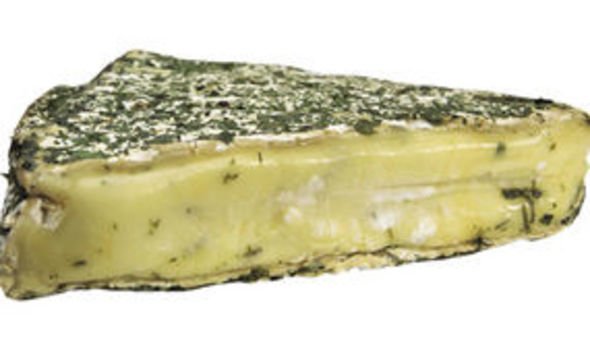 David Cameron finally snapped in the Commons last week. Evidently frustrated by the French support for proposals to put a tax on City of London trades, he quipped:
‘I’m sometimes tempted to ask the French if they would like a cheese tax,’
They certainly didn't respond well back in 2009 when the US announced plans to triple import duties on Roquefort cheese from 100 to 300 per cent. So I think we can confirm that the PM's instinct is right on this one.
Thursday, November 3, 2011
Gaines-Cooper case does NOT show futility of HMRC guidance
What it shows is the futility of trying to exploit HMRC general guidance for tax avoidance purposes.
Even this isn't news. It has long been recognised that HMRC guidance, statements of practice and concessions do not have the force of law. They help resolve issues and to provide comfort for most people affected, most of the time. But when tax avoidance plans rely on such non-statutory notices then all bets are off. And no one should be surprised.
Robert Gaines-Cooper has been challenging HMRC's demands that he pay UK taxes despite his attempts to become non-UK resident in 1976. And I have commented on his continued failure to overturn HMRC's decision in previous blog posts.
Accountancy Age have headlined their latest article on the story: "Gaines-Cooper ruling shows futility of guidance".
I disagree, hence my statement above. As Accountancy Age note towards the end of their article:
Gaines-Cooper left the UK partly to mitigate his tax liabilities; there is £30m at stake; and lest we forget this is a trial that has already lasted six years and looks set to run further. In other words, this is not a run-of-the-mill case. Guidance, on the other hand, is meant for run-of-the-mill cases – the "ordinary sophisticated taxpayer",And that taxpayers are not not able to rely much on guidance when an action is undertaken in contentious areas because:
it is not in HMRC's interests to provide clear guidance for these cases. Taxpayers and advisors in these situations will have to argue on case law and legislation – a lesson Gaines Cooper has learnt the hard way.
Previous relevant posts
Thursday, October 27, 2011
Did Vince refuse to engage in tax 'avoidance'?
Leaving aside Vince's well publicised Tax Mistake on which I commented in my last blog post, there is another angle to the story. Did Vince refuse to engage in what he perceived to be 'tax avoidance' even though the facility in question is set out very clearly in the rules?
I was wondering why Vince's accountant (Myrus Smith) hadn't encouraged him to register for VAT long before the problem became apparent.
They seem to be a reputable firm and I suspect they did give him the advice any decent accountant would have done. But clearly Vince did not register early. He also seems to have ignored the standard advice that he would need to monitor his income as the year progressed, and then register for VAT once his earnings were likely to exceed the registration threshold. This is of course harder to do in practice than in theory - despite the rules.
I suspect that his accountants gave him good advice. I suspect that they explained to Vince that he could register for VAT even when his earnings were below the VAT registration threshold. And that if he did so it would reduce his taxes.
There are two angles here. The first is that once registered Vince would simply be charging his clients VAT and then paying over this VAT to HMRC. But it would also mean that he could claim a reduction for the VAT he paid on all business related expenses. This would have saved him money.
The second angle is that he could have registered to use HMRC's official VAT flat rate scheme. This is particularly beneficial for smaller businesses with very low outgoings. I suspect Vince was in this position and could have saved hundreds of pounds a year had he registered.
 But to Saint Vince, both of the above tax savings might have sounded like 'tax avoidance'. As such he probably chose not to register for VAT before it was necessary and then lost out by leaving it too late.
 If I'm right this is as good an example as any that the term 'tax avoidance' is being used too widely.
What do you think?
Vince wins Tax mistake of the week - tho there's more to this than meets the eye
 I couldn't resist bringing this blog out of hibernation to comment on the story about Vince Cable and the £500 fine he paid for failing to register for VAT. (And who can blame the Sun for reporting this under the headline 'Vince Avoids Tax').
Of course he wins my Tax Mistake of the Week award.
But I have some questions that the mainstream media seem to have missed. And in so doing they have misreported the story.
1 - Did Vince or any of his staff issue invoices for the fees and royalties that he earned during the year in question? If not how will he satisfy HMRC re the adequacy of his books and records? (I mean his accounting books and records, not the book he wrote or his Dancing records!) Let's assume the answer to this questions is 'yes'.
2 - Was VAT added to the fees he charged? If so, the invoices will have falsely suggested to his clients and publisher that he was registered for VAT and they will have accounted for VAT in error. So this probably didn't happen.
3 - But, if VAT wasn't added then his taxable income will have been overstated. Has he claimed his tax refund? For example on just one invoice he would have paid income tax on £8,000 but HMRC have now deemed this to include VAT such that his taxable income should be reduced to £6,667.
4 - How much has this error really cost Vince?
If his taxable income is now lower than he thought he will also have gifted more to charity than he intended to do so. In the above example, Vince is said to have gifted the KPMG fee of £8,000 to charity (under Gift Aid presumably). He has sufficient other income to cover this but his 'embarrassing' error has cost him more than the fine. He's out of pocket by the excess donations to charity. And if he hasn't claimed back the additional income tax then that's a further cost too.
There is also the question of whether Vince would have been treated as generously by HMRC under the new new penalty regime. And whether he received any special treatment.
I doubt we will ever know.
Let me be clear. I sympathise with Vince's embarrassment and agree that he did absolutely the right thing in sorting things out, unprompted, as soon as the oversight was brought to his attention. He neither sought to nor did he avoid any tax. Indeed he may well have refused to engage in what was to him tax avoidance by registering early for VAT. (See next blog post).
The above points are relevant to each invoice Vince issued for his speeches and for his book royalties. For example it has been reported that Vince charged £8,000 for a speech to KPMG. Did he invoice £8,000 or £9,600 (being £8,000 plus VAT)? If he only charged £8,000 then HMRC are deeming this to be VAT inclusive. The VAT included in such a fee would be £1,333 leaving net earnings of £6,667.
Subscribe to:
Posts (Atom)